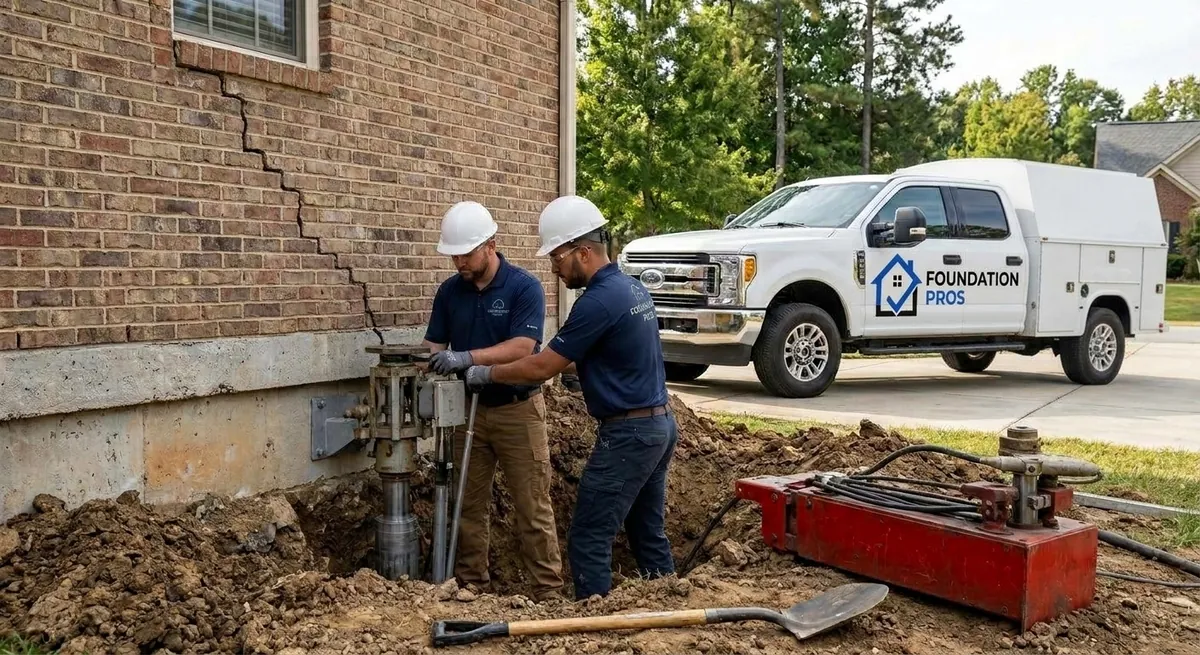
Foundation Stabilization
Foundation Repair and Piering in Columbia, SC
Seeing settlement or movement?
Repairing Foundation Movement at the Source
Foundation movement shows up as cracks, uneven floors, sticking doors, and gaps around windows. These signs do not all have the same cause. The first step is to learn how your foundation is moving and why.
For foundation repair in Columbia, SC, Foundation Pros of Columbia checks the home and the ground around it. If the foundation needs more support, we explain the repair in plain words. If it does not, we say so.
Signs your foundation may be moving
- Stair-step cracks in brick or block walls
- Floors that slope or feel bouncy
- Doors and windows that stick or no longer close well
- Gaps between walls and ceilings, or around window frames
- A chimney or porch pulling away from the house
Not sure what you are seeing? Start with a foundation inspection and structural evaluation in Columbia, SC.
Push Piers and Helical Piers: What Is the Difference?
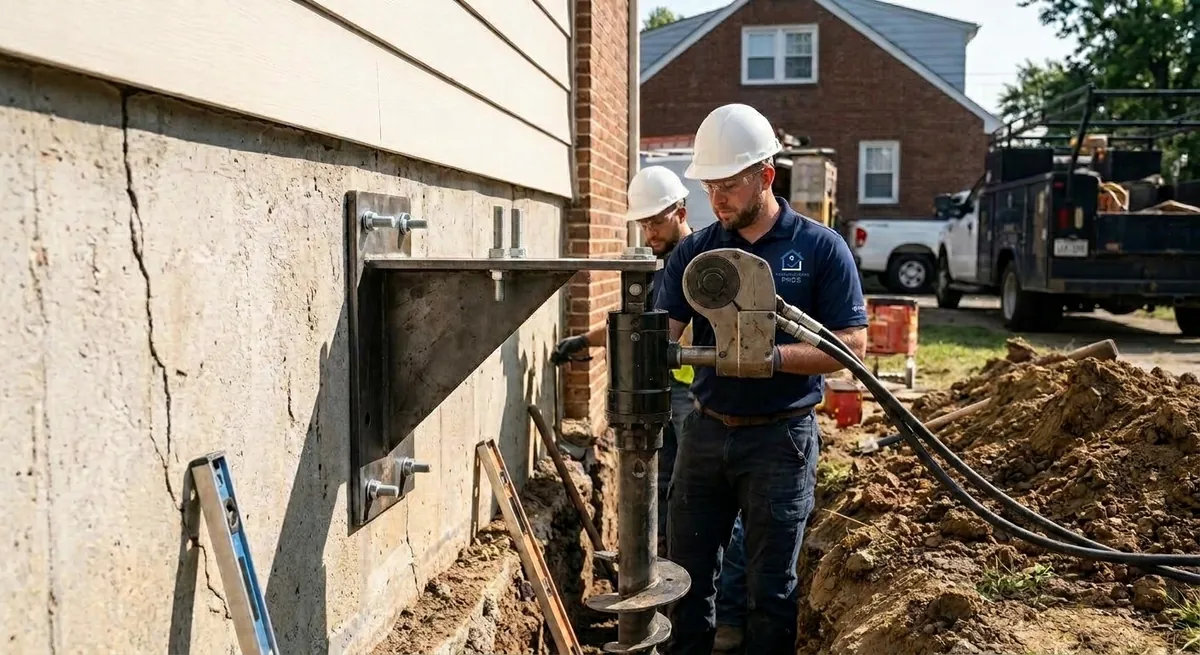
Both pier types are steel. Both pass through weak soil to reach firmer ground. They differ in how they go in and where they fit best.
| Feature | Steel push pier | Helical pier |
|---|---|---|
| How it goes in | A hydraulic ram pushes steel tubes down, using the weight of the home as resistance | A hydraulic motor turns a steel shaft with helix plates into the soil, like a large screw |
| Load check | Ram pressure shows when the pier has reached firm ground | Installation torque helps show how much load the pier can carry |
| Often used for | Heavier structures with firm soil or rock at depth | Lighter structures, porches, additions, and tight sites |
The right choice depends on your home, the soil, and the load. We explain which fits your property before any work starts. That choice is part of foundation piering in Columbia, and we make it with you.
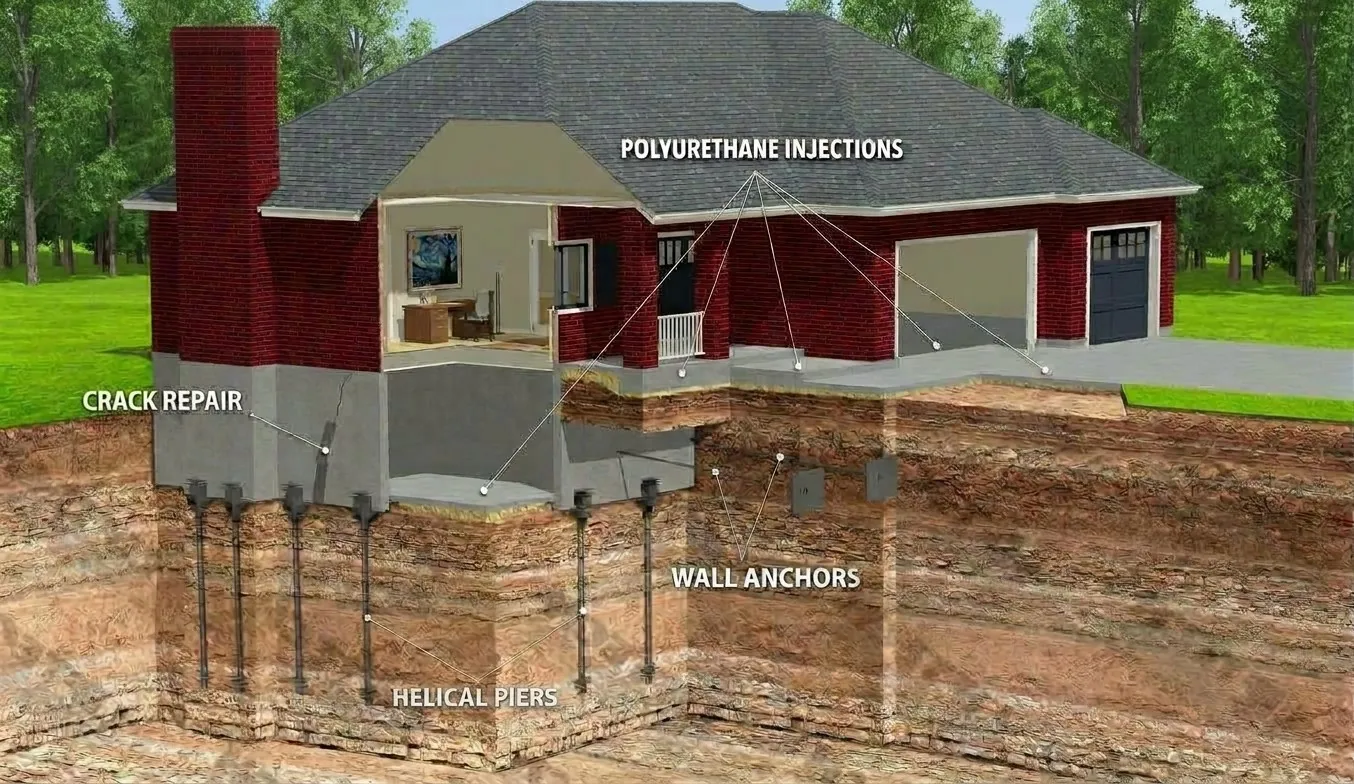
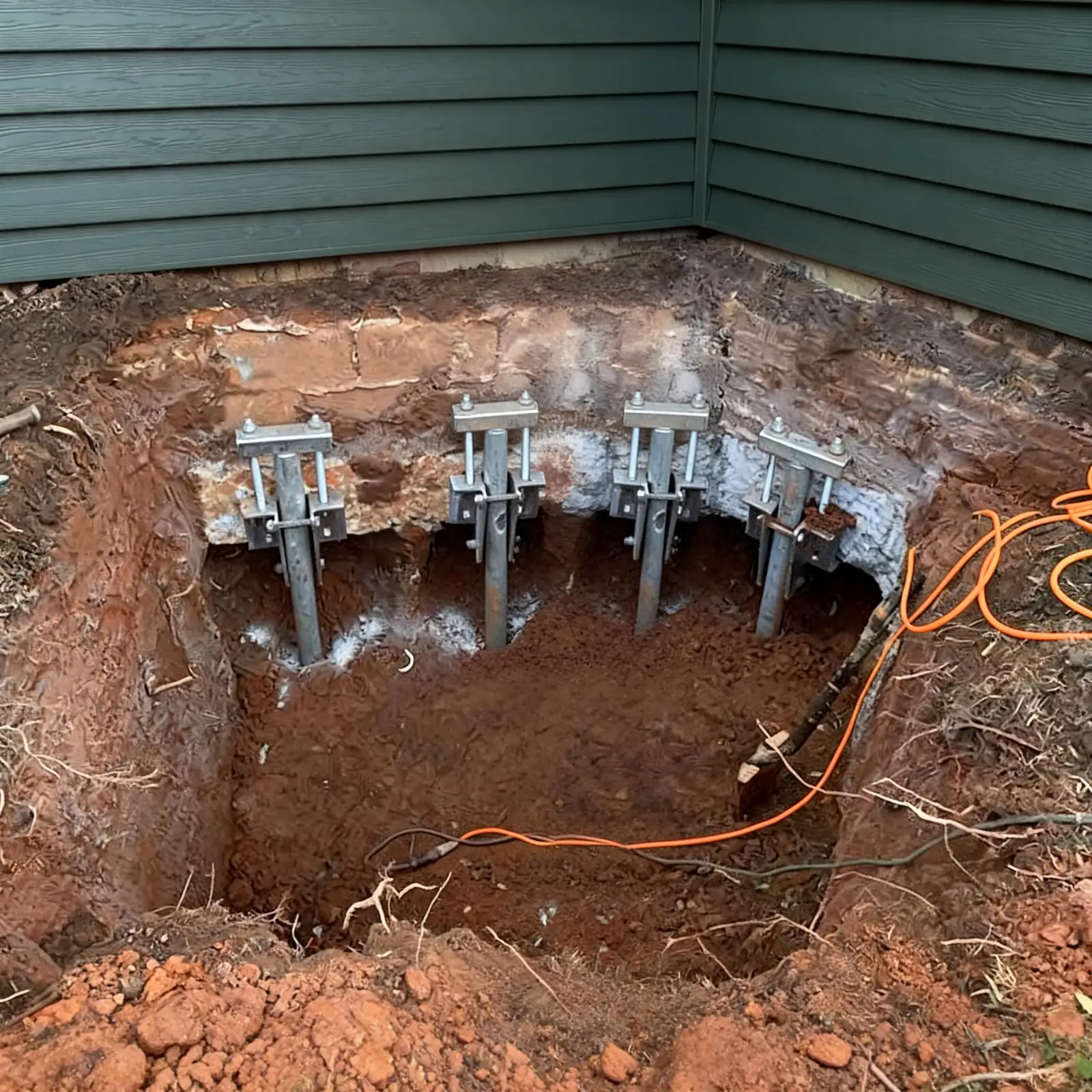
Our 5-Step Foundation Repair Process
Every repair follows the same path. The details change with your home.
- InspectionWe check cracks, floors, walls, drainage, and the soil around the home. We measure and photograph what we find.
- ExcavationWe dig small access holes at the pier locations next to the foundation.
- UnderpinningWe install steel piers down to stable soil. We then connect them to steel brackets under the footing so they carry the load.
- BackfillWe fill and compact the holes. We restore the area as closely as we can.
- Final QAWe check the work, review it with you, and answer your questions.
What Affects the Cost of Foundation Repair?
We do not quote prices without seeing the home. These factors move the price the most.
- Number of piers: A single corner costs less than a full wall or perimeter.
- Access: Decks, patios, landscaping, and tight side yards add time.
- Soil depth: Piers must reach stable ground, and that depth changes from lot to lot.
- Water and drainage: If water caused the problem, it may need its own fix. See basement waterproofing and drainage in Columbia, SC.
Ready for a real number? Request a free foundation repair estimate in Columbia, SC. Want a sense of typical numbers? See typical foundation repair costs in Columbia, SC.
Foundation Conditions in Richland and Lexington Counties
Columbia sits on the Fall Line. This is where the hills of the Piedmont meet the flat Coastal Plain. The Broad and Saluda rivers join here to form the Congaree River. Two very different kinds of ground meet in the same county.
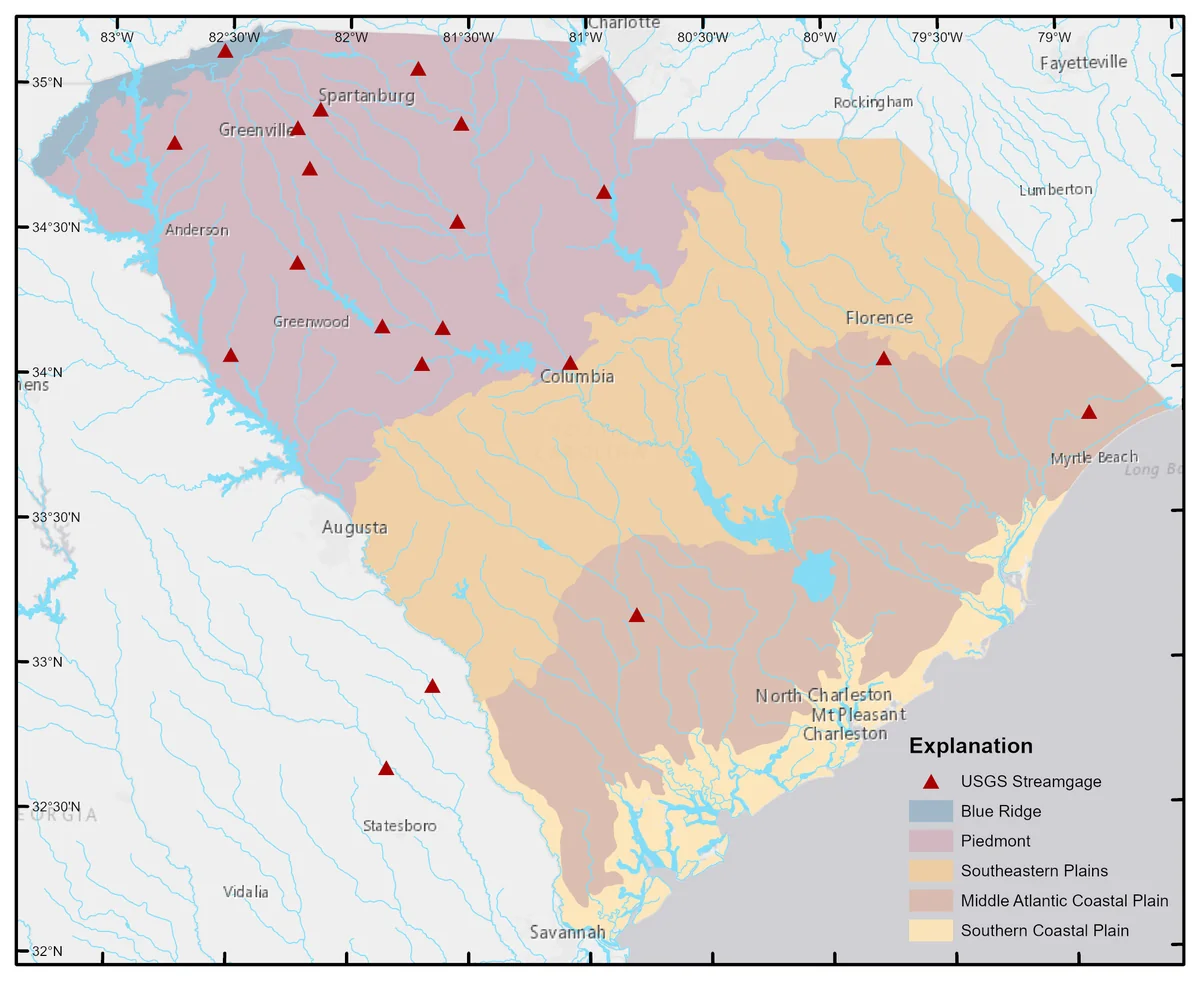
Red clay on the Piedmont side
Soils such as Cecil, Georgeville, and Nanford are common on the Piedmont side of both counties. The soil survey maps Cecil at Irmo and Georgeville at Chapin. They can hold up to about 50 percent clay in the subsoil. Most of this clay is kaolinitic, so its shrink and swell rating is low.
The bigger risks are water and slope. Wet clay gets soft and slick. Runoff also erodes soil beside the foundation. Weathered rock under the clay can be shallow in one spot and deep in the next, so pier depth changes across a lot.
Loose sand on the Sandhills side
South and east of the river, soils such as Lakeland, Troup, and Fuquay are sandy and drain fast. Lakeland soil is about 5 percent clay. Water moves through it quickly and can carry fine grains away from under a footing.
Sand also settles when it is loose or was not packed well after construction. Homes in and around Cayce, West Columbia, Lexington, and Forest Acres often sit on these soils.
Wet ground in river bottoms
Land along the Congaree, Saluda, and Broad rivers has alluvial soils such as Congaree, Chewacla, and Tawcaw. These stay wetter and sit in low spots. The soil survey gives some of them a moderate shrink and swell rating.
Pockets of higher-swell clay
A few soils rate higher. Enon, a Piedmont soil found in parts of Lexington County, carries a high shrink and swell rating in the soil survey. These pockets are small, but a home on one can move with the seasons.
Soil can change from one side of a lot to the other. You can look up your address in the USDA Web Soil Survey. We also check the ground during every foundation inspection in Columbia, SC.
Foundation Repair Questions in Columbia, SC
What causes foundation problems in Columbia, SC?
Water and uneven soil cause most of them. Red clay can soften and slip when it stays wet. Sandy soil drains fast and can wash out from under a footing. Poor drainage, leaking gutters, tree roots, and poorly packed fill add to the risk. Many Columbia lots have more than one soil type.
Is Columbia soil really 'expansive clay'?
Not mostly. Most of the red clay here is kaolinitic, which the USDA soil survey rates as low in shrink and swell. Some pockets are different, including certain floodplain soils and a few Piedmont soils in Lexington County. A local evaluation tells you which one is under your home.
How do I know if my home needs piers?
Cracks, sloping floors, and doors that stick can point to settlement. They can also come from normal aging or moisture. We look at the whole picture before we suggest piers. If piers are not the right fix, we tell you.
How much does foundation repair cost in Columbia?
The price depends on how many piers your home needs, how easy it is to reach the wall, and how deep stable soil sits. A small repair costs far less than a full perimeter job. We give you a written scope after a site visit, so you can compare it with other quotes.
Do I need a permit for foundation repair in Richland or Lexington County?
Permit rules change by city, town, and county. We explain what to expect for your address. You can also confirm with your local building office before work starts.
How long does pier installation take?
Many jobs take a few days. The count of piers, weather, and access to the foundation all matter. We give you a timeline when we give you the scope.
Does Columbia weather make foundation problems worse?
It can. Heavy summer storms dump a lot of water in a short time. That water can soften clay, wash out sand, and flow toward the house on sloped lots. Long dry spells can also shrink some clay soils. Good gutters and grading reduce the risk.
Foundation Repair Near You
Contact Us Today for a Free Estimate
If your Columbia area home shows signs of settlement or movement, call us. We will explain what we see.
Free, no obligations